Trimester 2 Complete! - An Update from Hannah
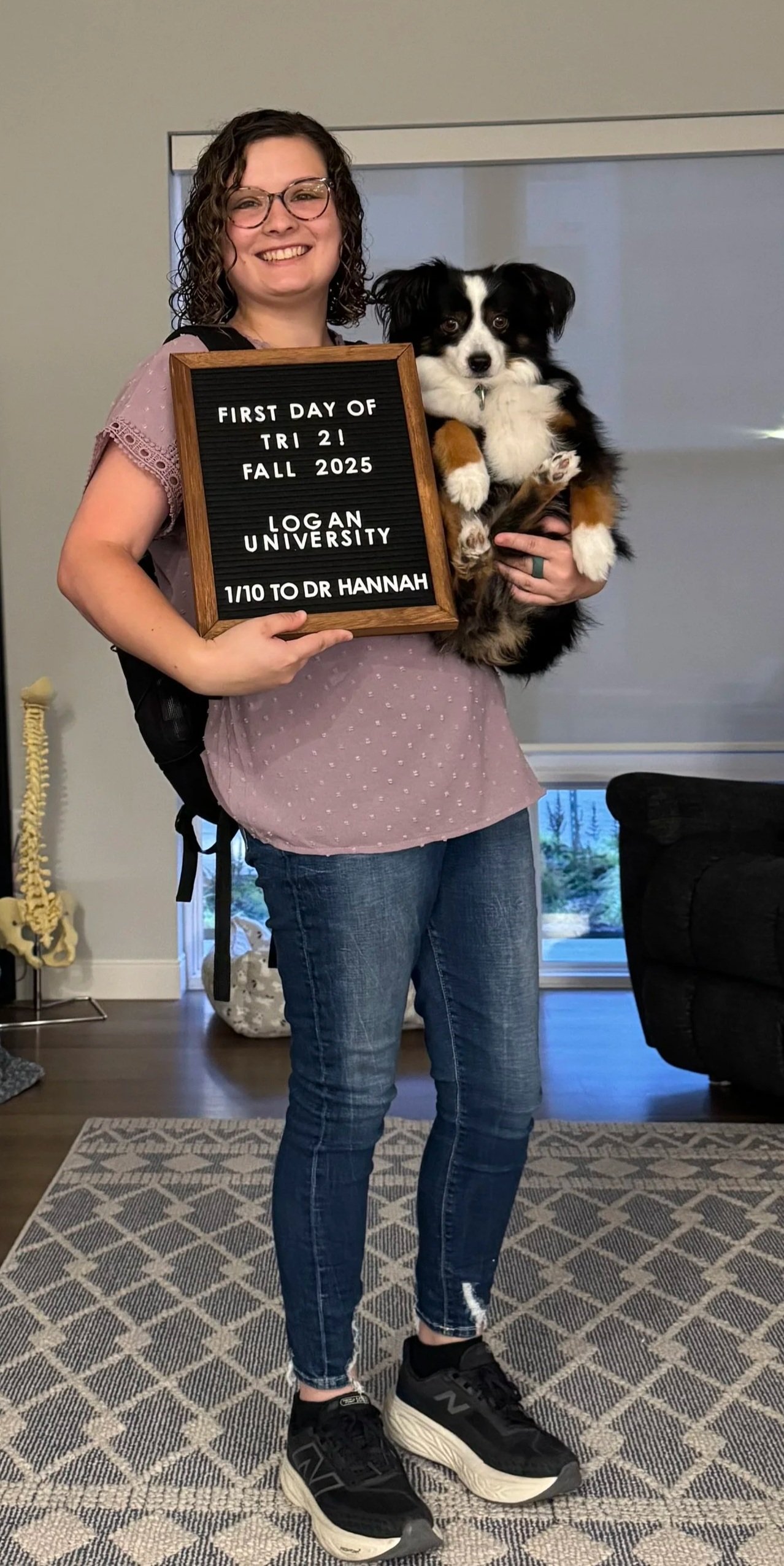
Tri 2 of 10 is complete — and it feels good to say that. I’d be lying if I said my brain didn’t feel a little fried, though. The last three weeks of the tri were anything but easy. They tested me, pushed me, and ultimately refined me. It felt like a revolving door of studying, practicals, more studying, and exams.
But somewhere in the middle of all that, something important shifted.
A Mindset Shift
I went from wanting to be the smartest person in the room to wanting to be the most intelligent. While those words might sound similar, they mean very different things to me.
Being “smart” is the ability to memorize information and repeat it back. Intelligence, on the other hand, is the ability to synthesize, apply, and communicate information in a manner that is both meaningful and understandable, particularly to patients. And in patient-centered care, intelligence matters far more than simply being smart.
Let me tell you, this shift hasn’t been easy. I thrive on academic validation, but that same drive easily leads to unnecessary stress and burnout. I keep reminding myself: I’m not in school to prove I’m the smartest person in the room. I’m in school so I can become the best provider possible for my future patients.
Through my own health experiences and my undergrad education at MU, I’ve learned that if I can’t clearly, empathetically, and effectively communicate what I know to my patients, then I’m missing the mark as a provider.
Life Inside the Classroom
The past 15 weeks were packed with learning. Much of my time was spent developing a deeper understanding of the brain, nervous system, head, and neck, all areas that play a crucial role in overall health.
Some of the key topics we covered included:
Structures of the brain and nervous system: Learning how different parts of the brain communicate with the nervous system to control movement, cognition, and vital functions.
Conditions affecting the brain, head, and neck: Studying diagnoses such as strokes, headaches, neuropathies, and movement disorders, and understanding how these conditions present and impact overall health.
Diagnostic tools: Gaining hands-on experience using tools like reflex hammers, pinwheels, tuning forks, otoscopes, and ophthalmoscopes to assess patients.
Neurological exams: Learning how to assess cranial nerves, reflexes, muscle strength, and sensation.
One of my favorite parts of this trimester was learning the basics of the chiropractic adjustment, particularly pelvic adjustments. I quickly learned that adjusting isn’t just about knowing what to do; it’s about mastering the foundations. This includes understanding chiropractic tables, different thrust techniques, and proper patient setup. These foundational skills allow adjustments to be both safe and effective.
I practiced my skills — a lot — on friends, my skeleton, and force tables at school.
What excites me most, though, is applying what I’m learning to real patient scenarios. Whether it’s recognizing signs of a neurological condition, understanding why muscle weakness might be present, or performing a thorough exam, each class challenged me to connect anatomy, diagnosis, and clinical reasoning. I’ve grown to really appreciate application-based questions because they force me to think — not just memorize.
Life Outside the Classroom

While it’s rare to find me doing nothing academic for a full 24 hours, this trimester taught me how important balance truly is. One of my favorite sayings is, “Always find time for the things that make you smile.”
This Tri, I intentionally made space for those things: going out to eat with friends, spending time with family, walking Dallas (my mini Aussie), cooking and baking, and curling up with a good book. These moments kept me grounded.
Some highlights outside of class included:
- Attending MU’s homecoming festivities with my family
- Catching up with friends from Columbia
- Starting my very own sourdough starter (still very much a learning process!)
- Volunteering as a kitchen volunteer for 812 Ministries (my undergrad student ministry) during their fall retreat at Cuivre River State Park
It was so fun to reconnect with friends, but getting only eight hours of sleep over three days? Not my favorite!
This trimester also pushed me to reflect on how I care for myself, both physically and mentally. The pace of chiropractic school is intense, and for a long while, it felt like my life revolved entirely around exam dates. I’ve learned that taking care of myself isn’t optional (who would’ve thought?); it’s part of learning how to show up fully in everything I do.
Reflection
Tri 2 came with both highs and lows, including some of my highest and lowest exam scores. But the growth I’ve experienced has been far more valuable than any single grade. When things didn’t go as planned, I chose to see them as learning opportunities rather than failures.
I can now say with confidence that I have a much better understanding of how I learn best, and which study habits aren’t for me (hello, group studying). This trimester reminded me that growth comes from resilience, reflection, and a willingness to adapt.
As I look ahead to Tri 3, I’m excited to continue learning adjustments and diving into the organ systems. I’m grateful for how far I’ve come, and I’m even more excited for what’s ahead.